Could Kartogenin Be the Next Hair Growth Breakthrough?
A neglected research molecule increased primary human outer root sheath cell activity, delayed follicle regression in mice, and produced a striking cartilage-regeneration signal in a separate rabbit study. The hair case is still preclinical, but the next experiments could be unusually informative.
Uses the best matching voice on your device. No subscription or per-listen fee.
 Open full size
 Key takeaways
- Kartogenin increased proliferation and migration in primary human outer root sheath cells from healthy donors, but this was a laboratory experiment, not a trial in people with hair loss.
- In mice, Kartogenin delayed the shift from anagen into catagen. Treated hair shafts were about 20% longer at day 18 and 32% longer at day 21.
- The hair study linked Kartogenin to lower TGF-beta2, phospho-Smad2, and phospho-Smad3 signaling, a pathway associated with follicle regression.
- A separate rabbit cartilage study makes the mesenchymal and dermal papilla question worth testing, but it does not prove Kartogenin regenerates dermal papilla cells or human hair.
- Kartogenin remains a preclinical research compound. There is no established human hair-loss dose, safety profile, or evidence supporting self-experimentation.
Kartogenin has two signals that hair researchers should not ignore
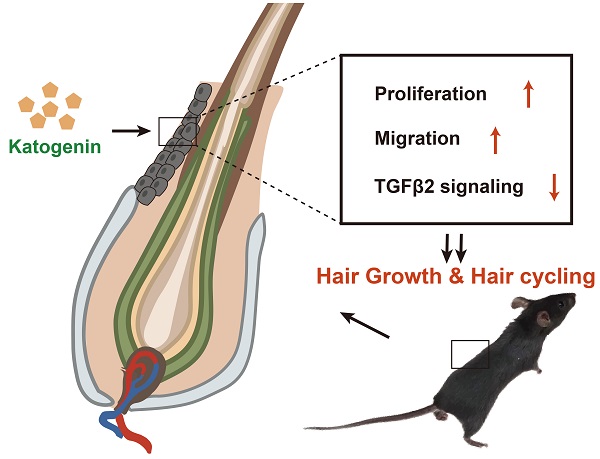
Kartogenin, usually shortened to KGN, has not regrown hair in a human clinical trial. It has done something more preliminary but still interesting: it increased proliferation and migration in primary human outer root sheath cells, reduced a regression-associated signaling pathway in those cells, and kept mouse follicles in their active growth state for longer.1
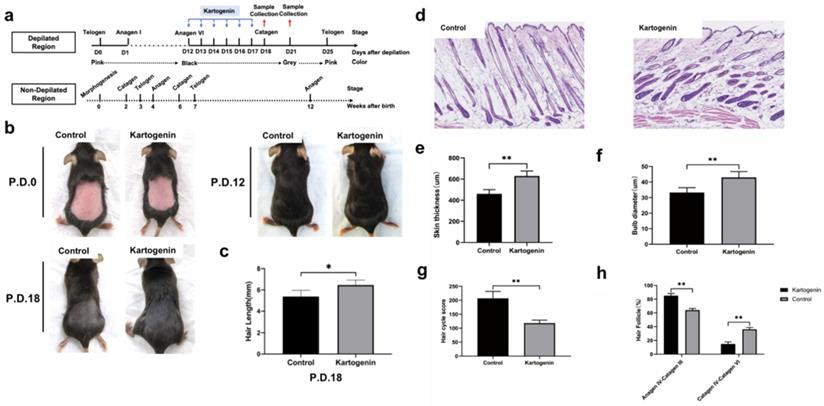
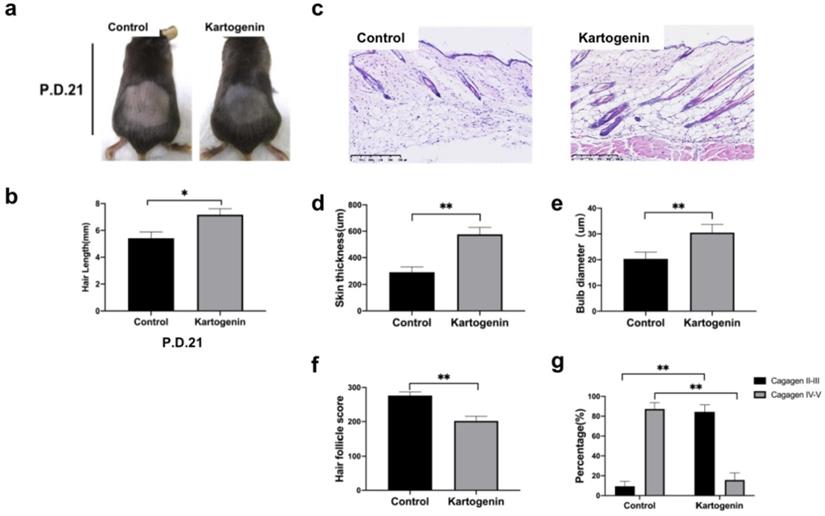
The headline number comes from the mouse experiment. Hair shafts were 1.20 times longer at day 18 and 1.32 times longer at day 21 in treated animals. At day 18, only 14.86% of treated follicles had reached later catagen stages, compared with about 36.13% of untreated follicles. That is a coherent preclinical signal, not a cosmetic before-and-after claim.1
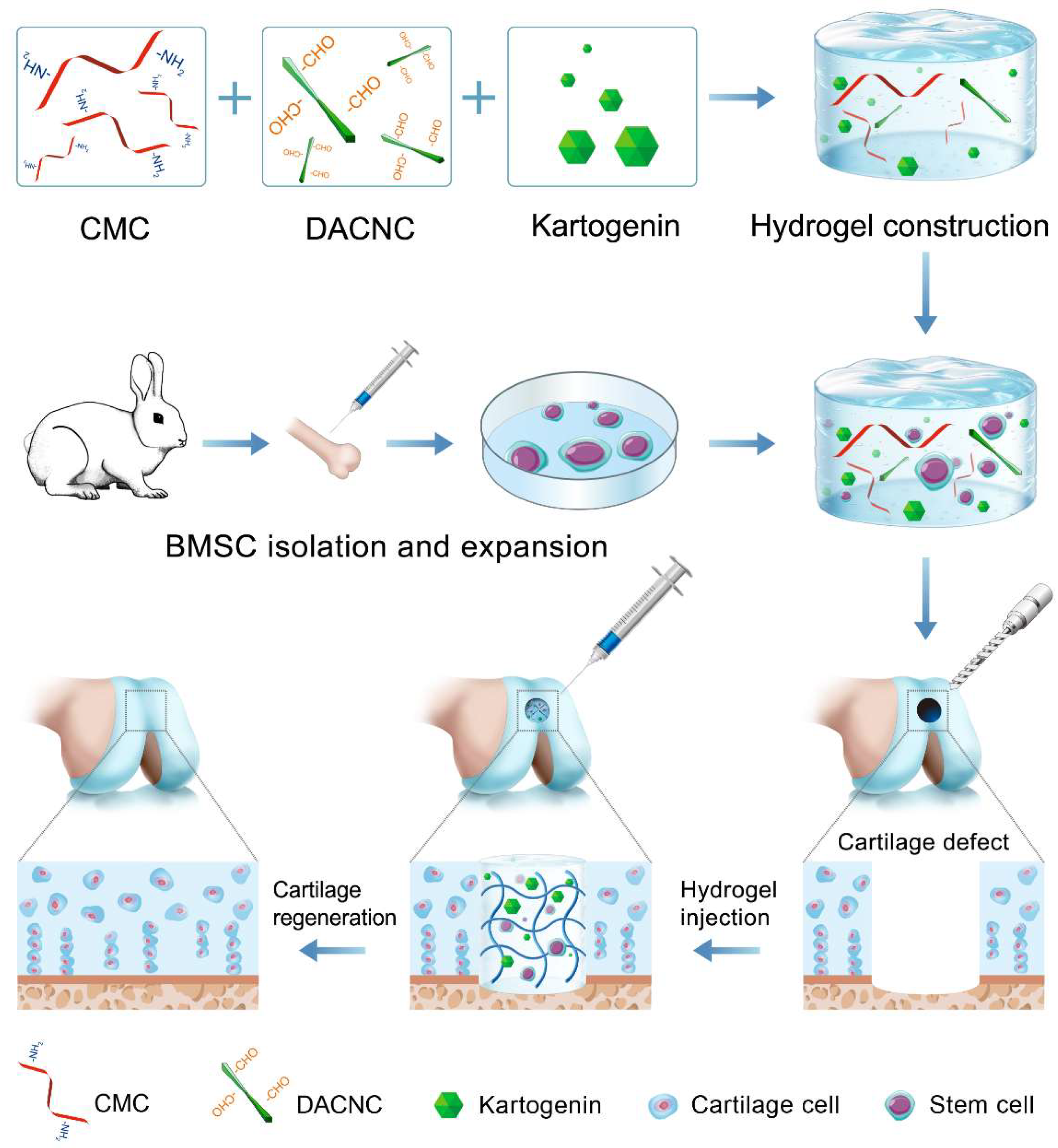
A separate 2025 tissue-engineering study adds a second reason to pay attention. When KGN was combined with rabbit bone-marrow mesenchymal stem cells and an injectable hydrogel, the combination produced the strongest cartilage repair. Because the dermal papilla is specialized mesenchymal-derived tissue, that result raises a good research question. It does not answer it.4
 Open full size
 What Kartogenin is, and what it is not
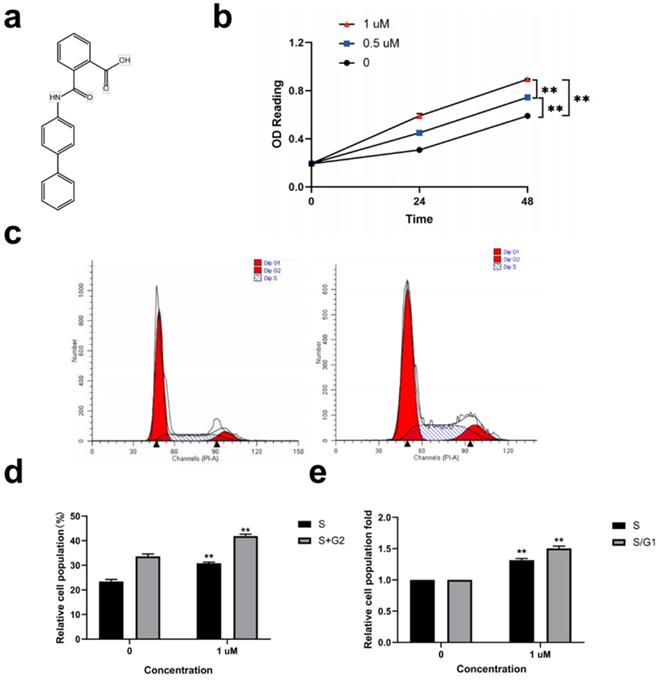
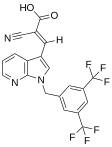
Kartogenin is a small research molecule with the formula C20H15NO3, molecular weight 317.34 g/mol, and CAS number 4727-31-5. In its best-established cartilage mechanism, it binds filamin A, disrupts the filamin A and CBF-beta interaction, and allows CBF-beta and RUNX1 signaling to support chondrogenic differentiation. Some supplier pages incorrectly paraphrase filamin A as fibrin A. They are not the same protein.23
The molecule viewer below uses the official PubChem three-dimensional conformer for CID 2826191. Rotate it, zoom it, inspect individual atoms, switch display modes, and compare the established compound facts with the still-open hair questions.2
Explore kartogenin atom by atom
Drag to rotate, scroll to zoom, select any atom, or use the keyboard. The coordinates come from PubChem CID 2826191.
- Atomic number
- 8
- Coordinate
- 1.75, -0.38, -1.83 angstroms
Kartogenin KGN
- Formula
- C20H15NO3
- Molecular weight
- 317.34 g/mol
- CAS Registry No.
- 4727-31-5
- PubChem CID
- 2826191
- Hydrogen bond donors
- 2
- Hydrogen bond acceptors
- 3
- Effective rotors
- 5
- Heavy atoms
- 24
2-[(4-phenylphenyl)carbamoyl]benzoic acid
C1=CC=C(C=C1)C2=CC=C(C=C2)NC(=O)C3=CC=CC=C3C(=O)OA cartilage mechanism, not a proven hair mechanism
- FLNA bindingKartogenin binds filamin A, also called FLNA.
- CBF-beta releaseThe interaction can free CBF-beta from filamin A.
- RUNX1 programCBF-beta can enter the nucleus and support a RUNX1-linked chondrogenic program.
That pathway was established in cartilage research. It cannot be assumed to operate the same way in outer root sheath cells or dermal papilla cells.
The first signal came from primary human outer root sheath cells
The 2022 hair study isolated primary outer root sheath cells from 15 healthy adults undergoing cosmetic surgery, including 10 women and 5 men between 20 and 50 years old. These were human follicle cells, which makes them useful, but they were not taken from a treatment trial and were not presented as androgenetic alopecia scalp samples.1
Kartogenin increased proliferation in a dose-dependent pattern. At 1 micromolar, the share of cells in S plus G2 phases rose from 33.64% to 41.88%. The S-phase fraction was 1.32-fold higher, and the S-to-G1 ratio was 1.50-fold higher than control. Those shifts are consistent with more cells entering an active replication state.1
 Open full size
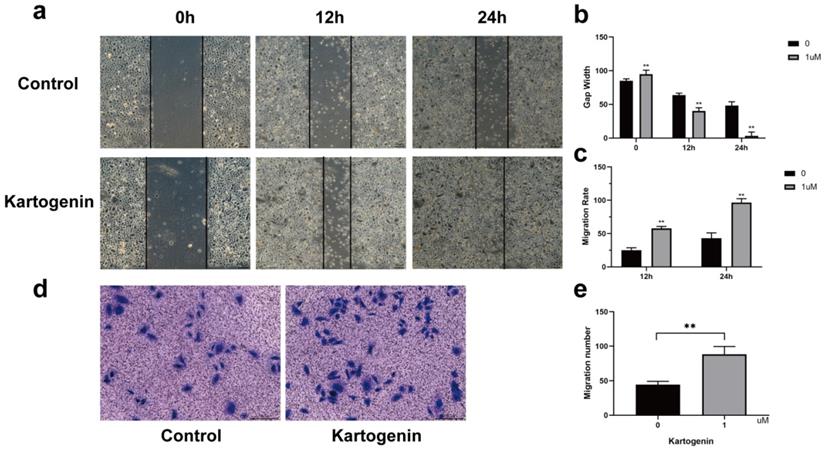
 Kartogenin also increased cell migration in two laboratory assays
Hair growth is not simply a matter of making more cells. Cells also need to move, communicate, and occupy the right follicular compartments. In both scratch-wound and Transwell assays, 1 micromolar KGN increased outer root sheath cell migration relative to untreated controls, with P values below 0.01.1
That result strengthens the cellular story because two different assay formats pointed in the same direction. It still does not establish that topical or injected KGN can reach the right human follicle cells at a safe, useful concentration.1
 Open full size
 The TGF-beta2 result may be the most important part of the hair paper
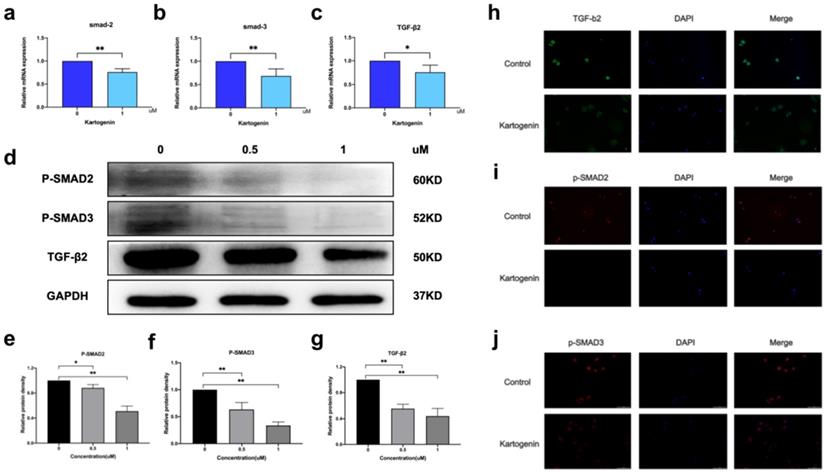
TGF-beta2 is involved in telling a follicle to leave anagen, its active growth phase, and enter catagen, its regression phase. In the human outer root sheath cells, KGN reduced TGF-beta2 messenger RNA to 0.75-fold of control, Smad2 to 0.76-fold, and Smad3 to 0.68-fold. At the protein level, TGF-beta2 fell to 0.66-fold, phosphorylated Smad2 to 0.49-fold, and phosphorylated Smad3 to 0.67-fold.1
The distinction matters: the study measured reductions in phosphorylated Smad2 and Smad3 proteins, the activated signaling forms, rather than showing that all Smad2 and Smad3 protein disappeared. The cell results support a plausible route to delaying catagen, which the investigators then tested in mice.1
 Open full size
 In mice, fewer treated follicles reached late catagen
The investigators induced a synchronized hair cycle by depilating female C57BL/6 mice, then injected KGN into dorsal skin once daily from day 12 through day 17. Each group contained six mice. At day 18, 14.86% of KGN-treated follicles had reached catagen stages IV through VI, compared with approximately 36.13% of control follicles.1
Treated animals also had thicker skin, larger hair bulbs, and longer shafts. The findings line up with the lower TGF-beta2 and Smad signaling seen in cultured cells: follicles appeared to remain in their productive state longer before regressing.1
 Open full size
 Mouse hair shafts were about 20% longer at day 18 and 32% longer at day 21
At day 18, treated mouse hair shafts measured 1.20 times the control length. By day 21, they measured 1.32 times the control length. Histology at day 21 still showed the KGN group at earlier regression stages, while control follicles had progressed further into catagen.1
This is the most visually compelling result in the study, and it deserves attention. It must also keep its species label. Thirty-two percent longer mouse hair shafts after a synchronized depilation experiment does not predict a 32% improvement in human scalp hair.1
 Open full size
 A rabbit cartilage study opens a different regenerative question
In 2025, another team built an injectable, self-healing hydrogel from carboxymethyl chitosan and dialdehyde cellulose nanocrystals. They combined it with rabbit bone-marrow mesenchymal stem cells and KGN, then tested the system in full-thickness cartilage defects in rabbits.4
The design matters. This was not a KGN-only experiment. The best-performing arm received a three-part combination: hydrogel, stem cells, and KGN. Any claim that KGN alone completely repaired cartilage would overstate what the experiment can separate.4
 Open full size
 The hydrogel made KGN a sustained local signal, not a one-time free molecule
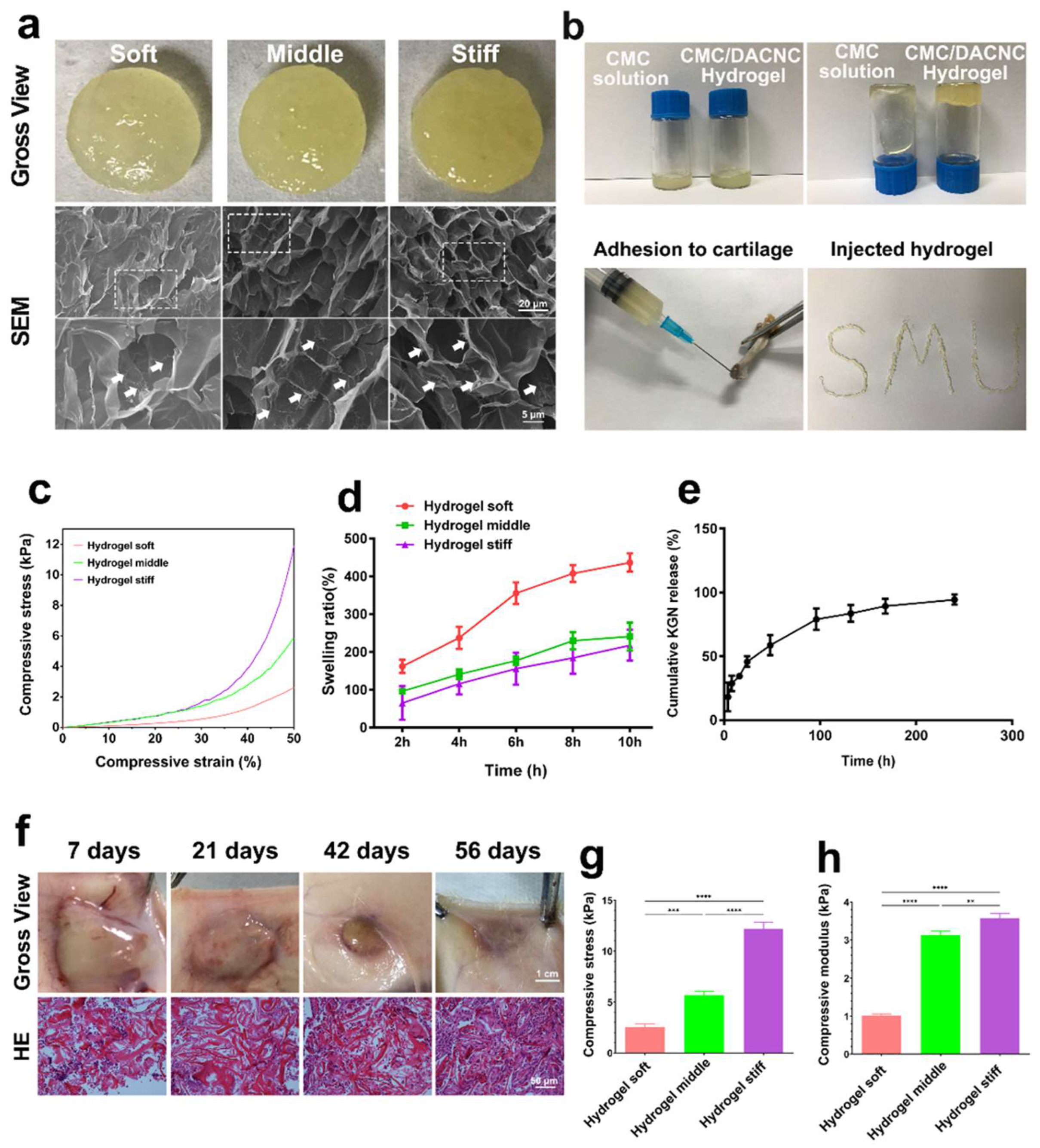
The researchers selected 100 nanomolar KGN for their cell-differentiation work and loaded 200 micrograms per milliliter into the hydrogel formulation. About 90% of the loaded KGN was released over roughly 180 hours in vitro. The material was designed to stay injectable while providing a structured environment for the stem cells.4
That delivery context is part of the result. A molecule in a scaffold can behave differently from the same molecule in a simple solution. This is also why the broader osteochondral-repair field studies extracellular-matrix-inspired scaffolds and layered environments, including systems that do not use KGN at all.45
 Open full size
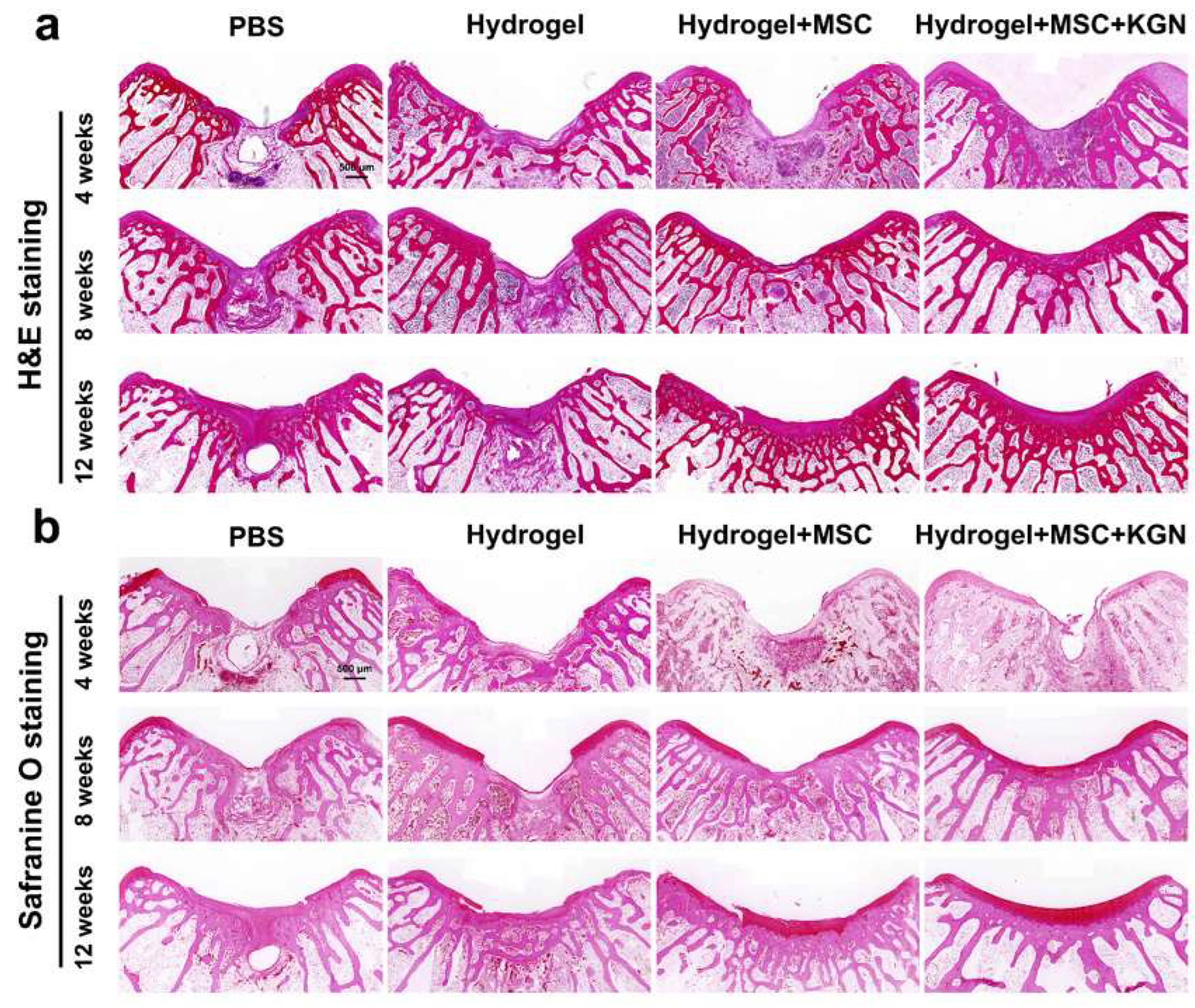
 The combination produced complete visible coverage by week 8
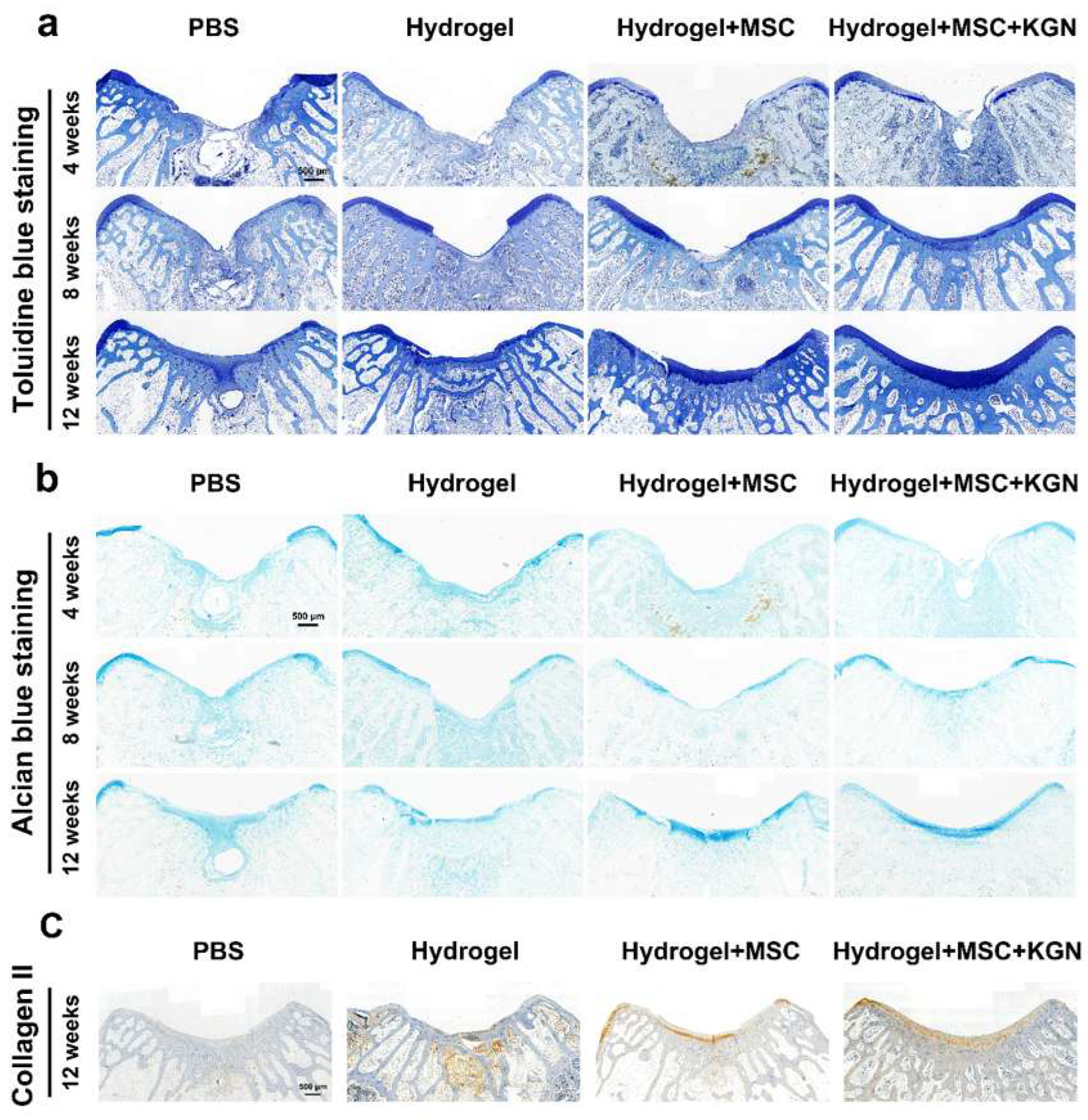
The study enrolled 36 male New Zealand rabbits across four groups: PBS, hydrogel alone, hydrogel plus rabbit mesenchymal stem cells, and hydrogel plus stem cells plus KGN. Three animals from each group were assessed at each of weeks 4, 8, and 12.4
By week 8, the hydrogel plus stem-cell plus KGN group showed complete visible coverage of the defect. By week 12, the authors described the defects as nearly completely repaired, while untreated defects were largely occupied by fibrous tissue. Histology favored the same combination arm.4
 Open full size
 The repaired tissue also showed the strongest cartilage-matrix signal
Toluidine blue, Alcian blue, and collagen II staining were strongest in the combination group. The cell experiments also found more cartilage-related extracellular matrix and stronger chondrogenic markers with KGN. In this setting, KGN helped push mesenchymal stem cells toward a tissue-building cartilage state.4
That is exciting regenerative biology, but cartilage is not hair. Chondrogenic differentiation is not dermal papilla differentiation, and a signal that builds useful cartilage could be irrelevant or even poorly directed for follicle regeneration. The correct response is to test the idea, not assume the bridge.4
 Open full size
 Could Kartogenin affect the mesenchymal side of the follicle?
The dermal papilla sits at the base of the follicle and helps coordinate the growth cycle. Its cells are specialized mesenchymal-derived cells. That makes a direct experiment compelling: expose human dermal papilla cells, three-dimensional dermal papilla spheroids, and intact AGA follicle organ cultures to carefully controlled KGN concentrations, then measure identity, signaling, aggregation, inductivity, and hair-shaft production.
The 2011 JCI study gives this question more context. In bald androgenetic alopecia scalp, KRT15-high stem-like cells were retained, but CD200-high and ITGA6-high progenitor-like cells and CD34-positive populations were substantially depleted. The result supports a stem-to-progenitor conversion problem. It does not prove dermal papilla dysfunction is the sole cause, and it does not show KGN corrects the deficit.6
Newer outer root sheath research also points to a more connected follicle. A 2026 study found oxytocin-neurophysin 1 in the outer root sheath, higher oxytocin expression in outer root sheath cells than dermal papilla cells, and measurable oxytocin secretion from cultured outer root sheath cells. That work supports paracrine communication between follicular compartments, but it did not test KGN.7
| Evidence layer | What the study showed | What remains open |
|---|---|---|
| Human outer root sheath cells | More proliferation and migration; lower TGF-beta2 and phospho-Smad2/3 signaling | Whether the same effects occur in AGA scalp at a safe exposure |
| Mouse follicles | Delayed catagen and longer hair shafts | Whether people experience meaningful density, caliber, or growth changes |
| Rabbit cartilage combination | Strongest repair with hydrogel plus mesenchymal stem cells plus KGN | Whether KGN can preserve or improve human dermal papilla identity and function |
| Human AGA scalp | Stem-like cells retained while key progenitor populations were depleted | Which signals can restore productive stem-to-progenitor conversion |
Outer root sheath biology can influence the cycle through more than one signal
KGN is not the only molecule reported to alter outer root sheath behavior in preclinical research. Morroniside increased outer root sheath cell proliferation and migration through Wnt10b, beta-catenin, and LEF1 signaling, and also shifted mouse follicle-cycle timing. It is a useful comparator because it shows that similar cellular outcomes can emerge through a different pathway.8
The most useful KGN research program would therefore avoid betting everything on one marker. It would measure TGF-beta2 and Smad activity, Wnt signaling, dermal papilla identity, epithelial progenitor formation, follicle cycling, shaft caliber, and actual growth together. A molecule can look impressive in one assay and fail when the whole follicle has to coordinate.186
Promising does not mean ready for the scalp
There is no established human hair-loss formulation, dose, dosing schedule, or safety profile for KGN. A 2019 study reported that KGN can hydrolyze into 4-aminobiphenyl and phthalic acid in experimental systems. The authors detected a small amount of 4-aminobiphenyl in mouse cartilage after oral KGN and called for chemical modification to reduce potential toxicity concerns.9
Supplier purity percentages, solvent instructions, shipping conditions, and storage windows describe a particular research product or lot. They are not clinical directions. KGN is sold for research use, not for patients, and the available literature does not support mixing, injecting, or applying it outside a regulated study.10
- First decisive experimentTest KGN directly on human AGA dermal papilla cells and three-dimensional spheroids, with identity and inductivity readouts.
- Second decisive experimentUse intact human follicle organ culture to measure cycle stage, shaft production, and tissue toxicity in the same system.
- Formulation workMeasure scalp delivery, local retention, breakdown products, and exposure before drawing conclusions from nominal concentration.
- Clinical thresholdOnly a controlled human study can establish safety and meaningful changes in density, caliber, or patient outcomes.
Kartogenin deserves a real hair research program
Kartogenin is easy to overlook because its best-known reputation comes from cartilage. The hair paper changes that. Primary human outer root sheath cells became more proliferative and migratory, TGF-beta2 and activated Smad signaling fell, and mouse follicles stayed productive for longer. The day-21 hair-length result is large enough to justify serious follow-up.1
The cartilage work makes the next question more ambitious: can KGN or a safer analog influence the mesenchymal side of the human follicle without pushing cells toward the wrong lineage? Nobody has yet shown that it can. But direct dermal papilla, follicle-organoid, and human organ-culture studies could answer the question quickly and turn an intriguing connection into either a real program or a clean dead end.49
For now, the right conclusion is positive and disciplined. Kartogenin has a coherent preclinical hair signal, an unusually interesting regenerative backstory, and a clear set of experiments waiting to be run. That is not a cure. It is exactly the kind of underexplored lead hair research needs more of.
Sources & further reading
We prioritize official labels, professional medical organizations, and peer-reviewed literature. Sources accessed for this guide on .
- 1Kartogenin regulates hair growth and hair cycling transition
International Journal of Medical Sciences
- 2Kartogenin compound summary, CID 2826191
PubChem, National Library of Medicine
- 3
- 4
- 5
- 6
- 7Outer root sheath cells secrete oxytocin for hair growth promotion and stem cell proliferation
Journal of Bioscience and Bioengineering
- 8
- 9
- 10Kartogenin product and compound profile
MedChemExpress
Comments and replies
The discussion about Could Kartogenin Be the Next Hair Growth Breakthrough? is public. Everyone can read every thread and reply. Signed-in members can comment, reply, and mention people with their @handle.