How AI Hair Analysis Helps Clinics Track Hair Loss Progress
We build more than endpoints. Our engineers combine hair loss biology, machine learning, and practical AI implementation to create tools that clinics, practitioners, and patients can keep using.
Uses the best matching voice on your device. No subscription or per-listen fee.
 Open full size
 Key takeaways
- TrichoLens can connect guided scalp capture, specialized analysis, practitioner review, and patient progression tracking in one workflow.
- Hair transplant clinics and dermatology practices can use structured timelines to review visible change before, during, and after care.
- Partners can choose a private API, embedded evaluation, white label platform, custom dashboard, or a complete clinic system.
- Our engineers bring experience in hair loss biology, machine learning, and AI implementation, and they improve the platform every week.
- We stay involved after launch with fair, scope-based pricing and ongoing product support.
Good clinic AI starts with the workflow
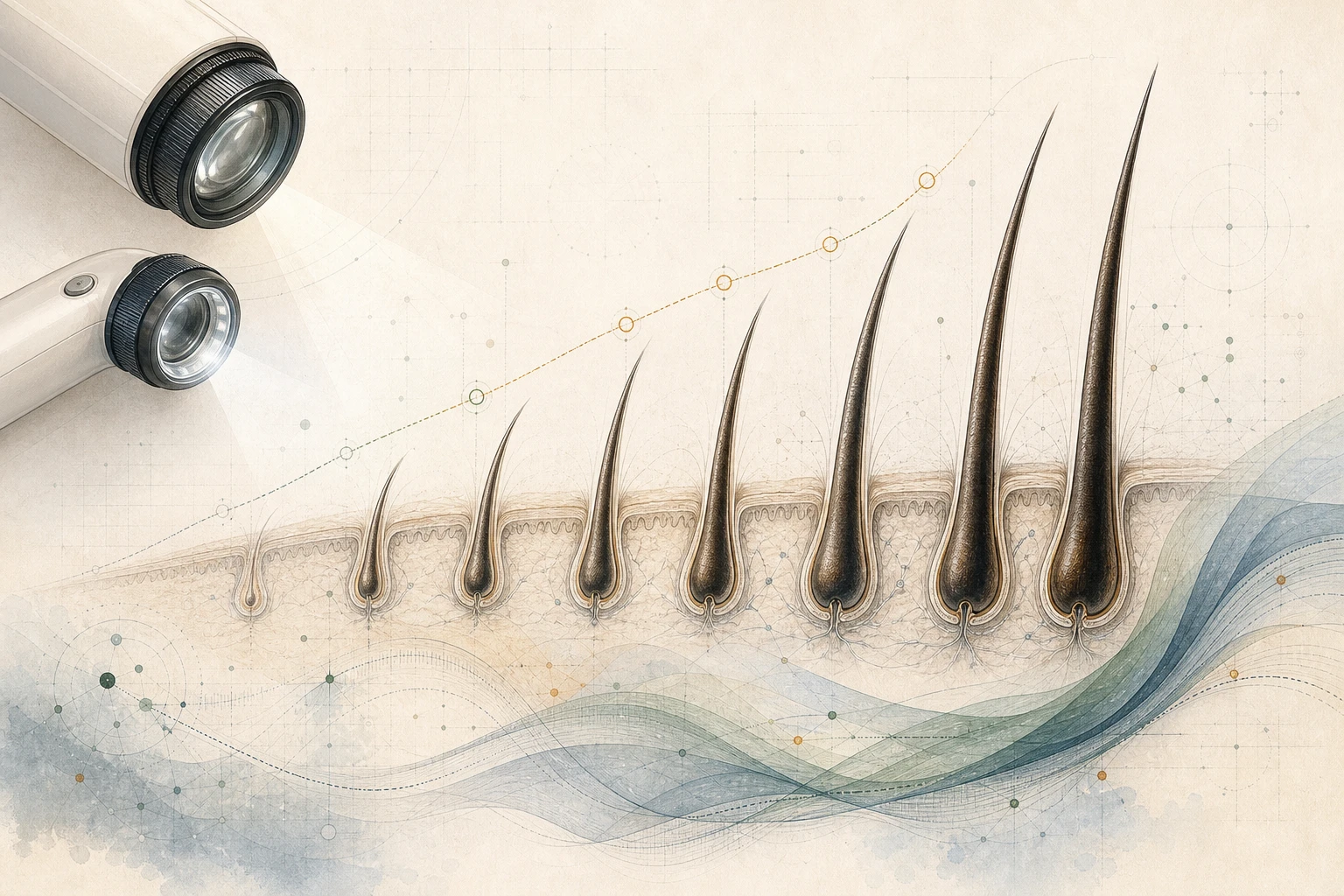
Most clinics do not need another disconnected AI score. They need a practical way to collect better patient images, keep those images tied to the right timeline, compare changes under more consistent conditions, and make the record easier for staff and patients to review. That is the kind of AI hair analysis system we build at TrichoLens.
Our clinic work can begin with a private API, but it does not have to end there. We can add an online hair evaluation to an existing website, build a white label patient experience, create a practitioner dashboard, connect progression tracking to an established workflow, or develop a larger platform for several locations. You can see the full partnership scope on our hair loss API and clinic software page. The goal is to solve the clinic's problem, not simply hand over an endpoint.1
We have worked with hair transplant clinics, med spas, dermatology practices, and trichologists around the world. Each practice uses different language, has different staffing, and follows patients in a different way. We start with those realities before choosing the interface or model route.1
Hair loss progression tracking starts before the model
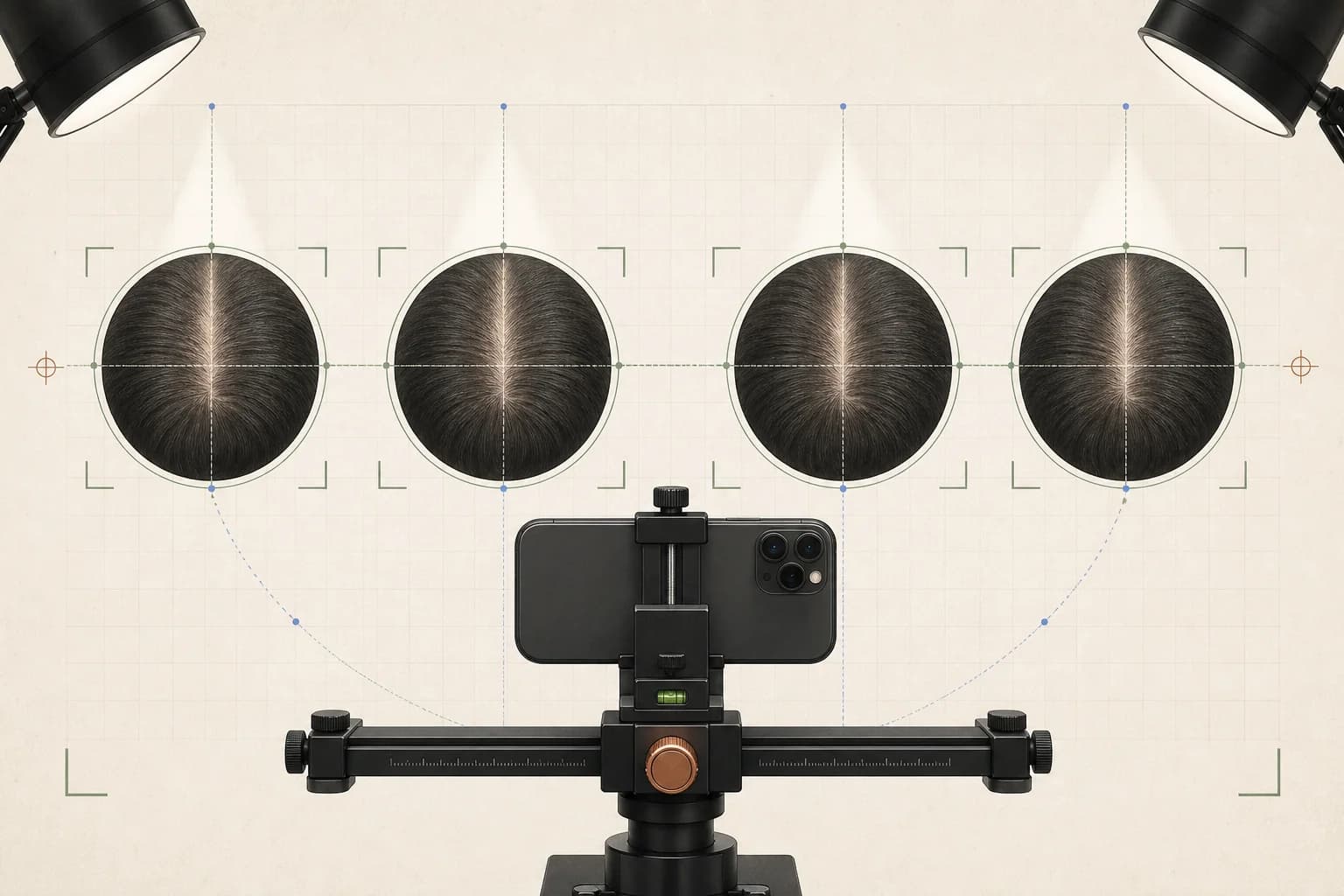
A useful progression record begins before an image reaches a model. The same scalp can look very different when the lighting, angle, camera distance, crop, hairstyle, or magnification changes. Clinical imaging research has long treated standardized capture as a basic requirement for useful comparison.67
We can build guided capture, required views, quality checks, region labels, reminders, and comparison intervals into the workflow so each follow-up has a more reliable baseline. Our guide to repeatable scalp progress photos explains why those controls matter even when a clinic uses a high-quality camera.4
That record can help when a patient is receiving non-surgical care, preparing for or recovering from a transplant, or returning to a dermatology practice for review. It can show what appears different and when it changed. It cannot prove that a treatment caused the change, and it does not replace the practitioner's judgment.
Different hair and scalp images need different analysis paths
A full-head phone photo, a hairline view, and a magnified trichoscopy image are different kinds of evidence. We do not treat them as interchangeable. TrichoLens can route each capture through a specialized analysis path and return structured information for the part of the workflow it is meant to support.3
Our platform uses proprietary training data, purpose-built computer vision models, and specialized AI workflows trained and operated on scalable cloud infrastructure. Depending on the project, those systems can support image quality checks, matched regional comparisons, visible pattern observations, follicle or shaft measurements, report fields, confidence context, and clear routing for practitioner review.13
We place useful results in context instead of leaving them inside a one-time scan. The clinic can decide what belongs in a patient timeline, what staff should review, what patients should see, and when an uncertain result should be retaken or escalated.
| Input | Useful workflow support | Important boundary |
|---|---|---|
| Full-head and hairline photos | Guided capture, regional history, matched follow-up views | Appearance can change with light, angle, styling, and hair length |
| Close scalp images | Image quality, structured observations, zone-level review | A close image should not be interpreted as a complete diagnosis |
| Trichoscopy captures | Calibrated measurement workflows and detailed practitioner review | Device, magnification, calibration, and protocol must be scoped |
| Patient-reported information | Structured intake, symptoms, goals, and timeline context | Self-reported information still needs clinical review when care decisions are made |
From a scalp capture to a useful patient timeline
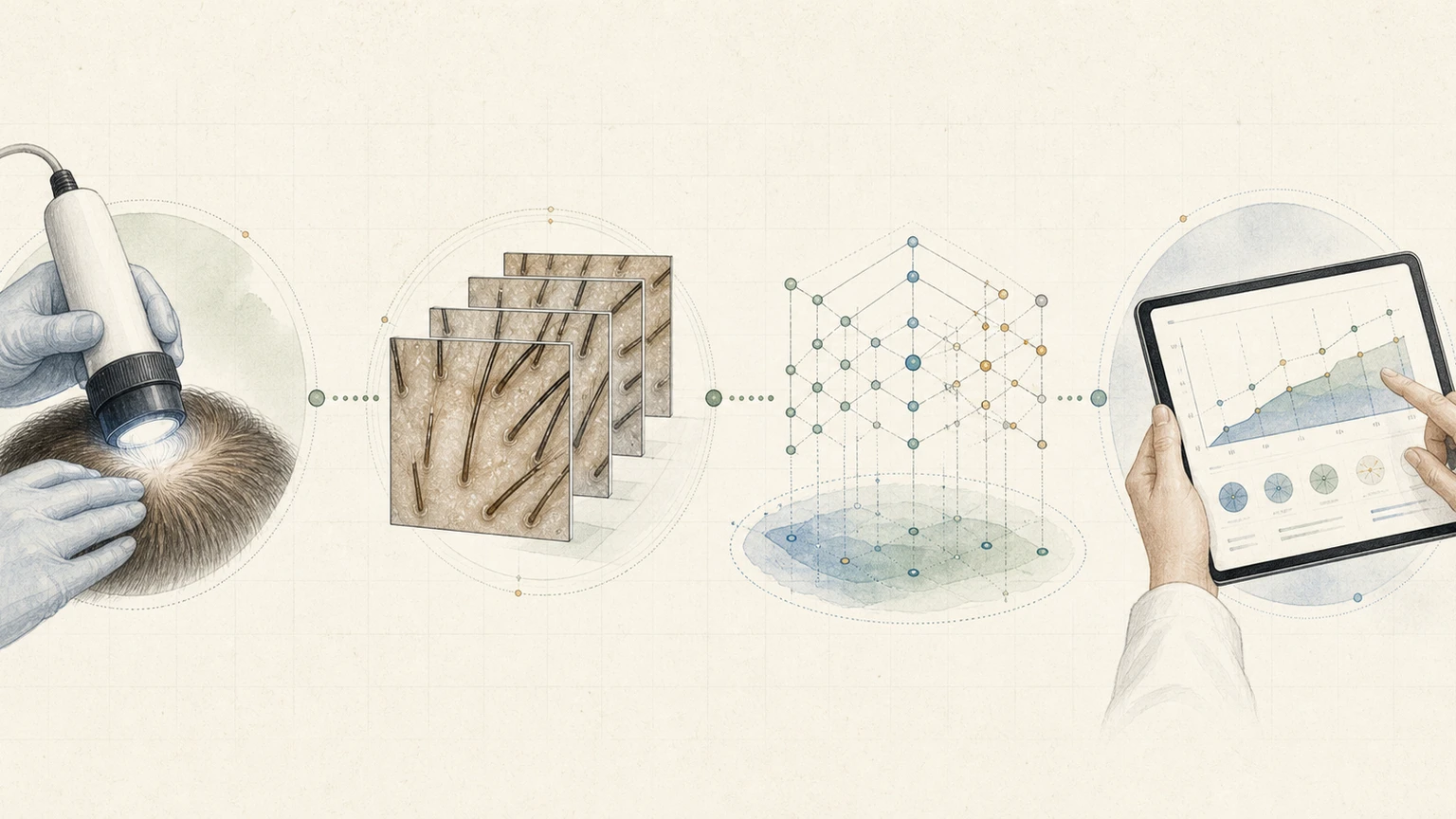
A typical workflow begins with a guided capture and a clear reason for taking it. The system checks the input, stores the visit in the right patient record, sends the image through the appropriate analysis path, and gives the practice a structured result to review. At the next visit, staff should be able to find the same region and understand what changed without rebuilding the history from a camera roll.
That sounds simple because it should feel simple. Behind it are decisions about permissions, consent, image retention, model versions, comparison rules, failed captures, exports, patient language, and staff roles. We handle those product details with the clinic during scoping.51
 Open full size
 Tools for hair transplant clinics, dermatologists, med spas, and trichologists
A clinic platform should reflect the work already happening around the patient. We can keep a focused first release small, or connect several parts of the journey when the practice needs a broader system.
| Partner | Possible workflow |
|---|---|
| Hair transplant clinic | Online evaluation, standardized pre-procedure photography, scalp observations, planning records, post-procedure check-ins, and long-term visual follow-up |
| Dermatology practice | Guided intake, repeatable regional images, treatment documentation, practitioner notes, and visit-to-visit review |
| Med spa | Branded assessment, consultation intake, treatment-series documentation, reminders, and a patient progress view |
| Trichologist | Structured consultation records, scalp and hair tracking, client reports, education, and follow-up |
| Multi-location group | Shared capture standards, role-based work queues, regional workflows, reporting, exports, and selected system connections |
A hair analysis API is one option, not the whole answer
Some partners already have a product and need a focused capability. For those teams, we can provide private APIs, custom endpoints, scoped authentication, documented result formats, usage planning, and integration support. We provide the documentation needed for the partner engagement, and we are preparing public API documentation and broader use-case guides.1
Other partners need the product around the API. We can build an embedded website evaluation, a white label patient platform, a practitioner dashboard, a reporting system, or custom clinic software from the ground up. Our current hair and scalp tools and services show several capabilities that can become part of a larger clinic workflow. We can begin with a controlled pilot, learn from the staff using it, and expand the system as the workflow proves itself.12
| Delivery model | Best fit | What we work through together |
|---|---|---|
| Private API or custom endpoint | A team with an existing website, app, or platform | Inputs, outputs, authentication, limits, versioning, testing, and support |
| Embedded online evaluation | A clinic that wants a guided experience on its current website | Branding, capture, intake, routing, review, follow-up, and conversion flow |
| White label patient platform | A practice that wants a branded patient journey | Accounts, timelines, reports, education, messaging, and clinic controls |
| Custom clinic system | A larger or specialized operation with several connected needs | Staff roles, locations, workflows, integrations, deployment, and continued product development |
We can build the niche integrations a generic platform skips
Hair and scalp care has many small workflow problems that broad software vendors rarely prioritize. Those are often the features that save staff time or make the patient experience feel considered.
- Website evaluationPlace a guided hair or scalp evaluation inside the clinic's existing site and route the result to the right team.
- Repeatable follow-upPrompt the same views at chosen intervals and organize them by region, visit, treatment phase, or procedure stage.
- Patient timelineBring photos, structured observations, notes, reports, and selected milestones into one readable history.
- Practitioner dashboardCreate review queues, retake requests, internal notes, role controls, and exports that match the practice.
- Multi-location operationsStandardize capture and reporting while preserving the languages, teams, and processes each market needs.
- Selected system connectionsConnect to an existing website, patient portal, or clinic system when access, vendor APIs, privacy needs, and project scope allow it.
Our engineers understand hair biology and machine learning
Our engineering team works across hair loss biology, machine learning, computer vision, cloud systems, and practical AI implementation. That combination matters. A product team needs to understand what a follicle image can show, what it cannot show, why capture conditions change the result, and how the practice will use the output after the model runs.
We are building TrichoLens to be one of the strongest trichology AI platforms available. The advantage is focus: a simple technology stack shaped around hair and scalp workflows, with engineers improving the models, tools, and product every week. Not every weekly update changes a model. Some make capture clearer, the interface faster, the system more reliable, or the clinic workflow easier to manage.
A good clinic platform is not finished when it first launches. It should become easier to use and more useful as the staff working with it show us what they need. That is why we approach these projects as long-term partnerships.
Bring us the complicated version
No project is too large to bring to us. We do not dismiss ambitious briefs. We break them into practical stages with clear milestones, ownership, and support. A focused single-clinic pilot and a multi-location enterprise platform need different plans, but both deserve honest technical thinking.
Our rates are fair and scope-based. Pricing depends on expected volume, integration depth, custom development, deployment requirements, and ongoing support. We would rather define those variables clearly than hide them behind a generic enterprise package.1
- 01Show us the current workflow
We learn how patients enter, what staff capture, where records live, and what is slowing the team down.
- 02Choose a useful first scope
We define the users, inputs, outputs, privacy requirements, success criteria, milestones, and pricing.
- 03Build and pilot with the clinic
We test the product with the people who will use it and correct problems before a wider rollout.
- 04Launch and keep improving
We support the system, review feedback, plan model or workflow updates, and help the product grow with the practice.
AI should support the practitioner, not pretend to replace one
TrichoLens tools can help screen, measure, organize, surface visible patterns, and document progression. They are not a substitute for a dermatologist, transplant surgeon, trichologist, or another qualified professional. A visual trend does not prove diagnosis, treatment response, cause, or future outcome.3
Privacy and deployment also need real planning. During scoping, we review access, hosting, retention, consent, vendor, and regional requirements with the partner. Our methodology and limitations and privacy policy explain the principles behind the current platform.35
Hair analysis API and clinic software FAQ
| Question | Answer |
|---|---|
| Does TrichoLens offer a hair analysis API? | Yes. We can scope private APIs and custom endpoints, with partner documentation and integration support. Public documentation and broader use-case guides are coming soon. |
| Can AI track hair loss progression? | AI can support standardized capture, structured comparison, and visible trend review. It does not independently prove diagnosis or treatment efficacy. |
| Can a hair transplant clinic add an online evaluation to its website? | Yes. We can build an embedded or white label evaluation and connect it to staff review, intake, follow-up, or a larger patient platform. |
| Can TrichoLens support several clinic locations? | Yes. We can scope location roles, shared capture standards, reporting, languages, selected integrations, and regional workflow differences. |
| How is clinic software pricing determined? | Pricing is based on volume, integration depth, custom development, deployment requirements, and ongoing support. We provide a plan for the actual scope. |
Tell us what you want to build
Send us your clinic or company name, country, patient volume, locations, current systems, priority workflow, and preferred timeline through our Clinic Partners page, or email info@folligenz.com. We will talk through the right product, the right scope, a fair pricing plan, and what it would take to build it well.1
Sources & further reading
We prioritize official labels, professional medical organizations, and peer-reviewed literature. Sources accessed for this guide on .
- 1Clinic and Enterprise Partnerships
TrichoLens
- 2Hair and Scalp Tools and Services
TrichoLens
- 3Methodology and Technical Approach
TrichoLens
- 4
- 5Privacy Policy
TrichoLens
- 6
- 7Evaluating subjective versus objective measures of changes in hair density using standardized scalp photography
Journal of the American Academy of Dermatology via PubMed

Comments and replies
The discussion about How AI Hair Analysis Helps Clinics Track Hair Loss Progress is public. Everyone can read every thread and reply. Signed-in members can comment, reply, and mention people with their @handle.